TDP-43 targeted gene therapy
Professor Pietro Fratta and Dr Oscar Wilkins, University College London
Advancing Treatments Award
Accelerate new treatments
September 2024 - November 2029
£499,998.00

Summary
Gene therapies target the causes of MND at the genetic level. They insert a missing gene or molecule into target cells to silence, replace, or manipulate a faulty gene. Recent research has identified a new target for these therapies – a molecule called TDP-43. TDP-43 is a protein that plays an important role in the assembly line that converts information stored in our DNA into molecules called RNA, which are used as the template for making the proteins within our cells. TDP-43 is known to be dysregulated in about 97% of people living with MND.
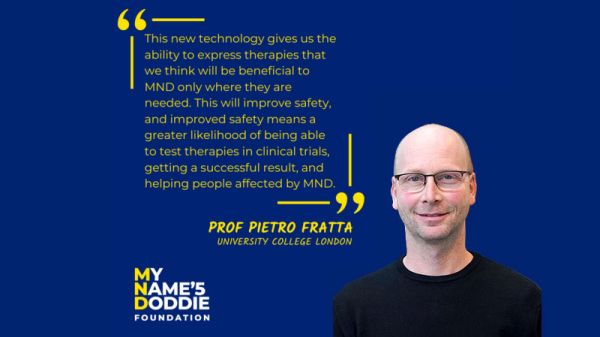
Prof Fratta’s team have developed a technology that only targets cells affected by harmful TDP-43, i.e. sick motor neurons in MND. It limits gene therapies to act on these cells only. It also includes a built-in switch that turns off the treatment once it has fulfilled its mission. Both of these innovations should improve the safety and efficacy of gene therapies that use Prof Fratta’s technology.
Why this research is important
Prof Fratta’s work could, in theory, benefit the ~97% of people living with MND who have toxic build-ups of TDP-43. A therapy helping this many people would be transformational. This project will tell us whether this technology is ready to be tested in the clinic. The technology is also flexible enough to be repurposed for other therapies targeting disease-linked genes
To find out more, see our in-depth article on this project here.
To learn more about gene therapies, check out our infographic.
More research projects
View all
Hear about future funding
By subscribing, you confirm that you agree with our terms and conditions.