Understanding RNA-binding proteins
Dr Matthew White,Dr Wilfried Haerty and Dr Brian Joseph, King’s College London, Earlham Institute Norwich Research Park and Columbia University Irving Medical Centre
Catalyst Award
Validate therapeutic targets
June 2025 - April 2027
£99,640.00

Summary
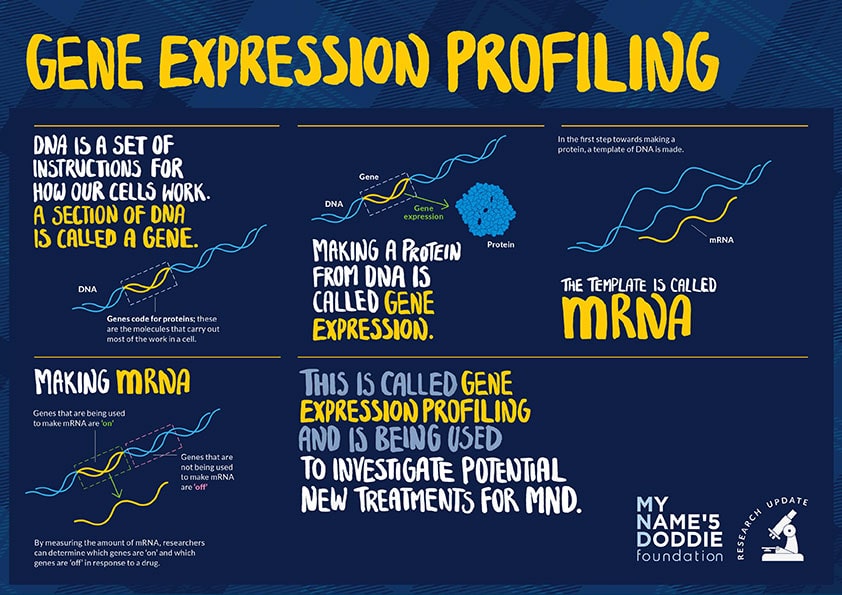
DNA is the instruction manual that our cells use to build proteins. Sections of DNA, called genes, hold the blueprint for making specific proteins. The DNA instructions within the gene must be converted to RNA which is then used to make protein. Molecules called RNA Binding Proteins (RBPs) are vital for the DNA instructions to be converted into RNA. In MND, several RBPs lose their function. This impacts the ability of the protein instructions in DNA to be converted into RNA, which leads to neuron death.
Using a powerful technology, Dr White and his team will generate “minibrains” - three-dimensional models grown in the lab, that mimic different types of neurons that exist in the human brain. They will use the “minibrains” to understand how RNA is impacted when RBPs lose their function and how this impacts different types of neurons. This will shine a light on what types of neurons are most vulnerable in MND and reveal new insights into how the disease begins.
Why this research is important
This project will result in an in-depth view of how RBP dysfunction affects different types of neurons, which will accelerate our understanding of early disease mechanisms in MND. In the future, this knowledge could inform the development of diagnostic tools and therapies that target the disease at its earliest and potentially most treatable stages.
Take a look at our TDP-43 and gene expression profiling infographics to learn more.
More research projects
View all
Hear about future funding
By subscribing, you confirm that you agree with our terms and conditions.