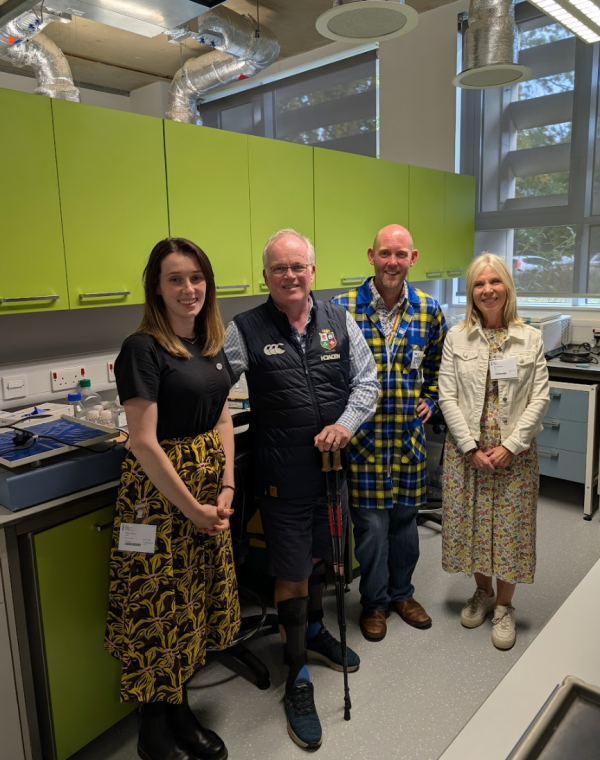
We recently visited one of our funded researchers, Professor Patrick Lewis, at the Royal Veterinary College in Hertfordshire. Professor Lewis, in collaboration with Drs Claudia Manzoni and Noopur Bhore at University College London, was awarded up to £77k for a 1-year project entitled “Targeting the TBK1 Pathway in MND”. The project came to an end in May, so it was a great opportunity for us to hear the outcome of the work we have funded.

We are committed to involving people affected by MND in everything we do. We were pleased to be joined during our visit by Nick Apperley, who is living with MND, and his wife Jill.

Jill and I were thrilled to have the opportunity to meet Professor Lewis and hear about his work. His presentation provided a clear, but detailed insight into the role of TBK1 in the ‘autophagy’ (cleansing) of nerve endings, and the importance of the process in enabling motor neurons to fire. Jill and I both left with enormous positivity that Professor Lewis has established a real cause of MND and that a solution should be possible. Doddie would be pleased to hear progress is being made.”

Nick Apperley

Living with MND

Professor Lewis is interested in a protein called TBK1. Reduced function of this protein has been linked to death of motor neurons in MND. This research is based on the hypothesis that we can boost the activity of TBK1 to treat MND. To test this, researchers first need to understand how the protein is “switched on” or “off” in the first place.

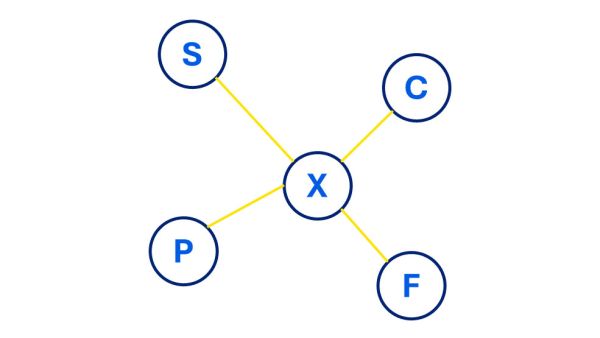
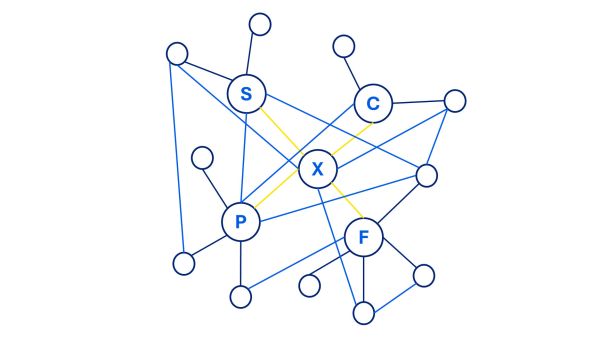
Dr Bhore built an “interactome”, a model of interactions that TBK1 has with other proteins. Another way of demonstrating this is through the interactions an individual (person X, or “X”) will have with other individuals in their life. They will have relationships with their spouse (S), children (C), parents (P) and friends (F), as highlighted in the graphic below. These are direct interactions.

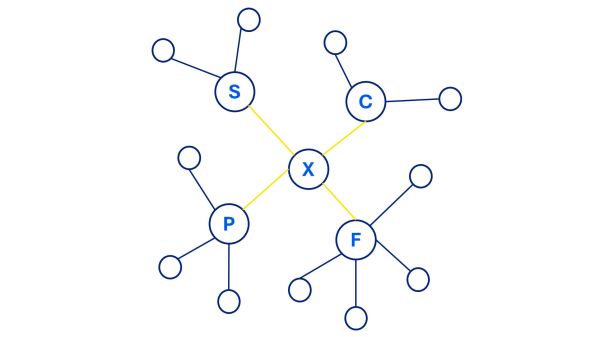
We can now populate our model with interactions that each of person X’s interactions has, too.

To build our model further, we can add in chance interactions between the people who are already there. For example, the sister of one of the colleagues knows person X from their school days. Eventually, all these interactions lead back to person X at the centre. These are indirect interactions.

Boosting the activity of a protein can be done directly, using a drug that attaches itself directly to TBK1, or indirectly, by changing the activity of one of the other proteins in the interactome. Through the funding we awarded, Professor Lewis has generated a detailed TBK1 interactome and also been able to establish a key part of the protein which is required for activation. A deeper understanding of this process could lead to potential new targets for treatments that could slow disease progression in people living with MND. Read more about identification and validation of new targets in our research strategy, Catalysing a Cure. He is now seeking further funding to test small molecules for their ability to alter TBK1 function with the aim of generating a new treatment for MND. To read more about the work Professor Lewis has been doing, you can find his published article here.

Our research on the project has provided new leads for targeting TBK1, addressing the Foundation’s strategic priorities. The data from our investigations supports further development of potential modulators of TBK1 function. We wouldn’t have been able to carry out this research without the support of My Name’5 Doddie Foundation, and all of the efforts of all of the people out there raising funds for the foundation.

Professor Patrick Lewis

Royal Veterinary College

Our Research Programme Manager for the Catalyst Awards, Dr Olivia Bird, added that: "In line with the aim of our Catalyst Awards, Professor Lewis and his team have built on an early-stage idea and developed a greater understanding of the role of TBK1 in MND. We are hopeful that this research will now catalyse further funding towards validation of a therapeutic target."

Professor Patrick Lewis is also a supporter of the Foundation and ran the Reading Half Marathon for us earlier this year. We featured the story and discussed his project in August. You can read more about Patrick’s project and the other research we fund on our research projects page.

To find out more about how you can support research like Patrick’s by making a donation or taking on a fundraising challenge, click here.

More news & stories

View all
 picture
Research
23 Sep 2026

Topline announcement of Phase 3 trial results for FUS-MND appear promising

Yesterday, the companies Otsuka and Ionis announced the results of their Phase 3 trial of the genetic therapy, ulefnersen. Ulefnersen targets a rare form of MND…
Read more
 picture
MND stories Research
14 Sep 2026

R.A.C.E. to Diagnose: New training programme to speed up MND diagnosis

For Andy Vaughton, receiving a motor neuron disease (MND) diagnosis in 2021 finally provided an answer for symptoms he had been struggling with for several years.…
Read more
 picture
Fundraising MND stories
10 Sep 2026

"I love you, and this is for you": Cammy cycles over 1,000 miles in memory of his Dad

This year, Cammy Jones has taken on two long-distance cycling challenges for My Name’5 Doddie Foundation: Doddie’s Triple Crown, which saw him ride from Melrose…
Read more
Bell icon

Join our Newsletter!

By subscribing, you confirm that you agree with our terms and conditions.