New funding strategy and multimillion-pound investment to investigate causes of MND
Thursday, 29 October 2026
Research
Today, we’re sharing the outputs of a research strategy exercise started earlier this year. In partnership with the MND Association and Costello Medical, we brought together leading researchers, clinicians, and people living with MND to develop a funding strategy to better understand non-genetic risk factors that could cause MND, resulting in the publication of a white paper and a new funding call.
The challenge
Understanding what causes MND remains a priority for the MND community, especially as the vast majority of cases cannot currently be explained by genetic mutations alone. Growing evidence suggests that risk of developing MND is likely to reflect a combination of a person’s own genetic risk, environmental influences, ageing, and lifestyle factors acting across their life course. However, current evidence on what may cause MND is often inconsistent, contradictory, or of insufficient quality to draw reliable conclusions.
Understanding how MND develops could open ways to treat or even prevent MND happening in the first place. It is essential to accelerate research into the causes of MND, while ensuring that future studies are of sufficient quality to provide clear and reliable answers.
| Non-genetic risk factors refer to environmental, occupational, lifestyle and other non-inherited factors that may influence MND risk, onset or progression. Examples of such potential risk factors include pollution, exposure to heavy metals or chemicals, physical activity, diet, and others. |
What we did to address it
To enable real progress in the field’s understanding of non-genetic risk factors for MND, we partnered with the MND Association and Costello Medical on a multi-stakeholder initiative to agree research priorities.
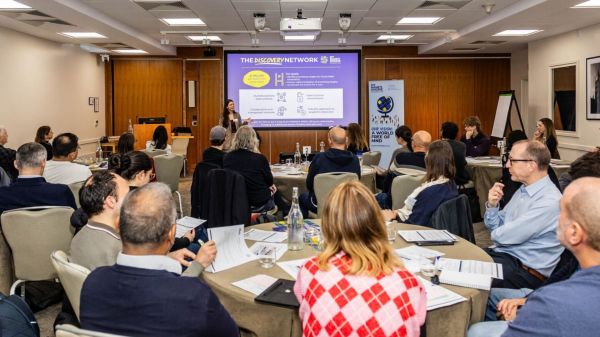
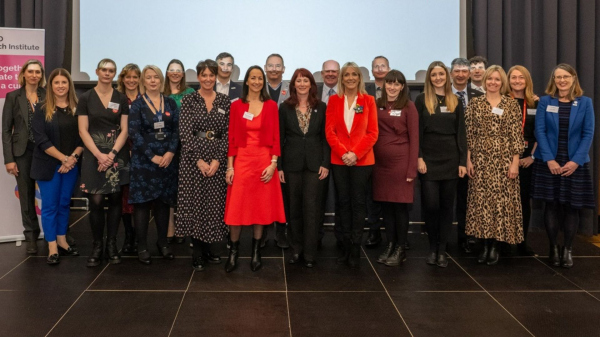
The initiative involved independent analysis of the research landscape, consultations with leading experts and culminated in an in-person workshop in June this year, which brought together scientific experts and people affected by MND. The results of the workshop led to the development of our white paper ‘Tackling Non-Genetic Risk Factors in Motor Neuron Disease’. The white paper sets out recommendations and priorities for future research to better understand non-genetic risk factors.
The approach we have taken ensures that the funding programmes we develop are informed by both scientific expertise and lived experience, enabling us to support the highest quality research with the greatest potential to improve outcomes for people living with MND.
The MND field has been moving at a fast pace. We can now take advantage of recent advances in our understanding of the disease and the availability of cutting-edge technologies to tackle this big question of potential environmental influence. Identifying non-genetic risk factors and uncovering the biological mechanisms by which they contribute to disease onset or progression could give us valuable insights into what may be protective and lead to new therapeutic approaches. Further down the line, this could also help us identify people who may be at increased risk early, with the potential to develop prevention strategies.
What's next
In line with our mission to act with urgency, we are continuing our partnership with the MND Association to address the white paper’s recommendations with a new funding call that will see a £4 million investment into our Discovery Network, in a round focused on risk factors. The funding call will open for expressions of interest on 11 November 2026.
Focusing on the identification of therapeutic targets and MND disease mechanisms, the Discovery Network funds teams working on large interdisciplinary three-year projects. We have invested close to £5 million in the Network so far. The Discovery Network provides substantial funding and a collaborative environment to support breakthroughs in our understanding of MND that could lead to fundamentally new approaches to treatment. Teams work together in an open and transparent network designed to accelerate innovation and spark discoveries.
For researchers
We will soon be inviting expression of interest applications to the Discovery Network Risk Factors round. In accordance with workshop recommendations (read the full report here), applications should move beyond identifying associations to generating mechanistic insights into how observed risk signals influence disease development, onset or progression.
The main risk factors discussed during the in-person workshop were:
- Lipid metabolism
- Occupational and chemical exposures
- Diet, alcohol and smoking
- Environmental exposures and pollution
- Physical activity/sports/strenuous exercise
- Impact and trauma (whole body or brain)
The Discovery Network Risk Factor round will prioritise projects that:
- Generate mechanistic insights into the risk factor’s involvement in MND development, onset and progression
- Apply or develop robust/tractable exposure measurements, biomarkers, or biological proxies
- Integrate genetic susceptibility and gene-environment interaction analyses in study design
- Leverage pre-existing resources and datasets, cohorts, and registries, including epidemiological studies
- Combine epidemiological and mechanistic approaches
- Include validation of findings using independent datasets, models, and experimental approaches
The request for applications, with full details for this funding round, will be available on the Discovery Network’s page on 11 November, when it opens for expressions of interest (closing date 21 January 2027).
Acknowledgements
Our special thanks go to Costello Medical for supporting the research priority scoping initiative, and to all the researchers, clinicians, and people affected by MND who took part in the consultations and in-person workshop.