R.A.C.E. to Diagnose: New training programme to speed up MND diagnosis
Monday, 14 September 2026
MND stories, Research
For Andy Vaughton, receiving a motor neuron disease (MND) diagnosis in 2021 finally provided an answer for symptoms he had been struggling with for several years. His experience highlights the need to help medical professionals spot possible signs of the disease sooner.
Andy's symptoms were initially linked to other nerve problems and a serious skiing injury, and he underwent potentially unnecessary surgery in 2020 for nerve damage before receiving his MND diagnosis the following year.
As a former doctor himself, Andy understands how difficult the disease can be to recognise in its early stages. But as someone living with MND, he knows that an earlier diagnosis can make a vast difference for people and their families.
That's why we've funded R.A.C.E. to Diagnose ALS/MND. Developed by the International Alliance of ALS/MND Organisations, the free training programme supports medical professionals in recognising the symptoms of MND earlier, speeding up referrals and helping people reach an accurate diagnosis sooner.
R.A.C.E. reflects the programme's main objectives:
- Recognise early signs and symptoms across different healthcare settings and specialities.
- Access clinical features and begin appropriate investigations without delaying referral.
- Communicate the need for urgent specialist assessment.
- Expedite referrals even without complete diagnostic confirmation.
The training provides practical guidance for a wide range of professionals in the healthcare service who may encounter MND, but who do not routinely work with it, including: physiotherapists, speech and language therapists, ear, nose and throat specialists and surgeons, amongst other professionals.
The training also shows how to explain an urgent referral without causing unnecessary alarm, and what clinical details to include so specialist teams can assess and prioritise whoever has been referred.
R.A.C.E.to Diagnose ALS/MND is the first programme of its kind in the UK, and is also being made available internationally.
Speaking on the importance of an earlier diagnosis, Andy said: "For most people, MND doesn't progress as slowly as it has for me. You need time to process what is happening, access the care you are going to require and bring together all the hospital specialists who will be involved."
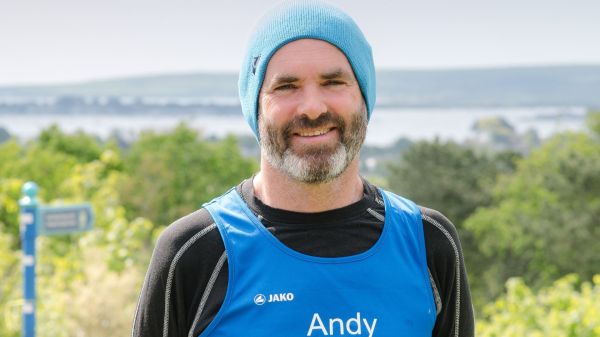
You also need to deal with everything at home and with your family. I knew I had a limited window of able-bodied life left, when I could still do the things I wanted to do. Having time to decided how to make the most of that window was incredibly important.
"I travelled, did the sports I loved and spent precious time with my wife and boys. I look back on that as a period well spent and know I made the right decision. I have been fortunate because my MND has progressed slowly, but for some people that window can be very short."
Andy's experience demonstrates how an earlier diagnosis can support the MND community, because diagnostic delays ultimately deprive people of valuable time to access care and make decisions about their lives, and the time they have left.
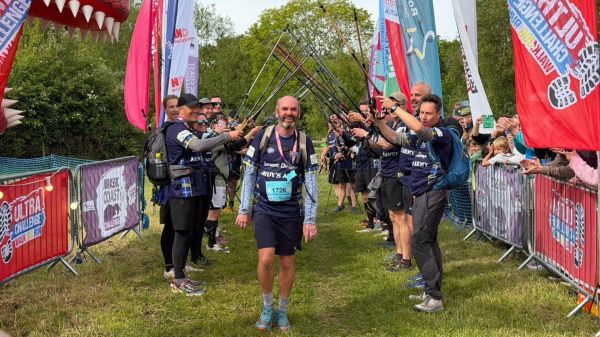
Since his diagnosis, Andy himself has selflessly chosen to dedicate a lot of his time to raising funds for MND research. Despite losing significant function in his arms and shoulders, he recently completed a continuous 100km fundraising challenge along the Jurassic Coast, requiring support with eating, drinking and changing clothes throughout the event that ran overnight.
We know diagnosing motor neuron disease is difficult. The initial symptoms can vary and resemble those of other conditions, and there is no one single test that can definitively diagnose MND, with a diagnosis usually coming after ruling out all other possible causes.
As a result, people can spend months, and sometimes longer, moving between different healthcare services, undergoing repeated investigations, and in Andy's case, having unnecessary surgical procedures before reaching a neurologist and arriving at a conclusive diagnosis of MND.
Indeed, improving early diagnosis was identified as a key priority by the MND community during the development of our Catalysing a Cure research strategy - because earlier diagnosis can help people living with MND access specialist multidisciplinary care sooner, including support with mobility, breathing, nutrition and communication. In some cases, early diagnosis may also enable eligible people to begin available treatments or enter clinical trials earlier in the course of the disease.
Our Director of Research, Jessica Lee, said: "MND is not common, its early signs can vary considerably and there is no single test that tells you conclusively that someone has it. That means people can move between different parts of the healthcare system before they reach the right specialist.
"R.A.C.E. to Diagnose gives professionals practical guidance on what to look for, how to assess what they are seeing and when to make an urgent referral.
"As treatments begin to emerge, reaching people earlier in the course of the disease may be critical to giving those treatments the best possible chance of having an effect."
But earlier diagnosis is about much more than treatment. It can give people with MND and their families more time to understand what is happening, access the right support, adapt their homes and decide how they want to approach the future.
The emergence of treatments targeting particular genetic causes of MND has also increased the importance of a timely diagnosis, and where appropriate, genetic testing.
Andy added: "I wasn't sure I would see this progress in my lifetime with MND, and it is remarkable that we have reached the start of that journey.
"As a former doctor, I understand why MND may not immediately be considered. It is uncommon, and raising the possibility of such a devastating diagnosis can cause fear and anxiety.
"But delay can create further problems. If this training gives professionals greater confidence to investigate or refer someone sooner, it could give people valuable time to access care, consider treatment and make decisions about their future."
R.A.C.E. to Diagnose ALS/MND is available to medical professionals across a wide range of disciplines now, and we are supporting the adaption and dissemination of the programme across the UK.
The training can be completed individually or used to train colleagues and peers, and is intended for professional education only to support clinical judgement and appropriate referral. It is not a public symptom checker or a tool to enable non-specialists to diagnose MND.
The programme has been funded by us and developed with the International Alliance of ALS/MND Associations, along with an international clinical faculty including Professor Chris McDermott of the University of Sheffield and Professor Orla Hardiman of Trinity College Dublin.
Access R.A.C.E. to Diagnose ALS/MND here: https://www.als-mnd.org/diagnose/